Anthropometrics
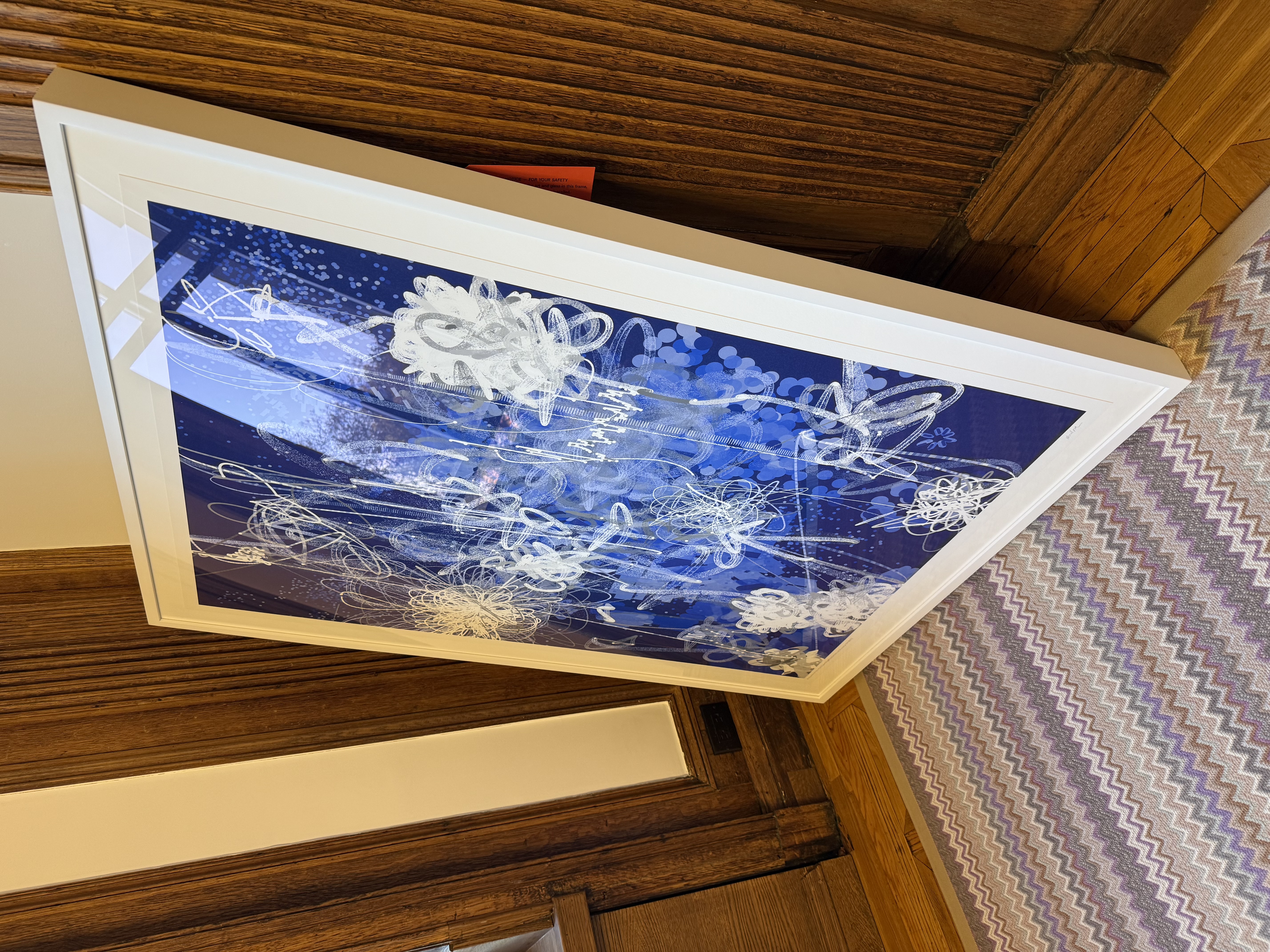
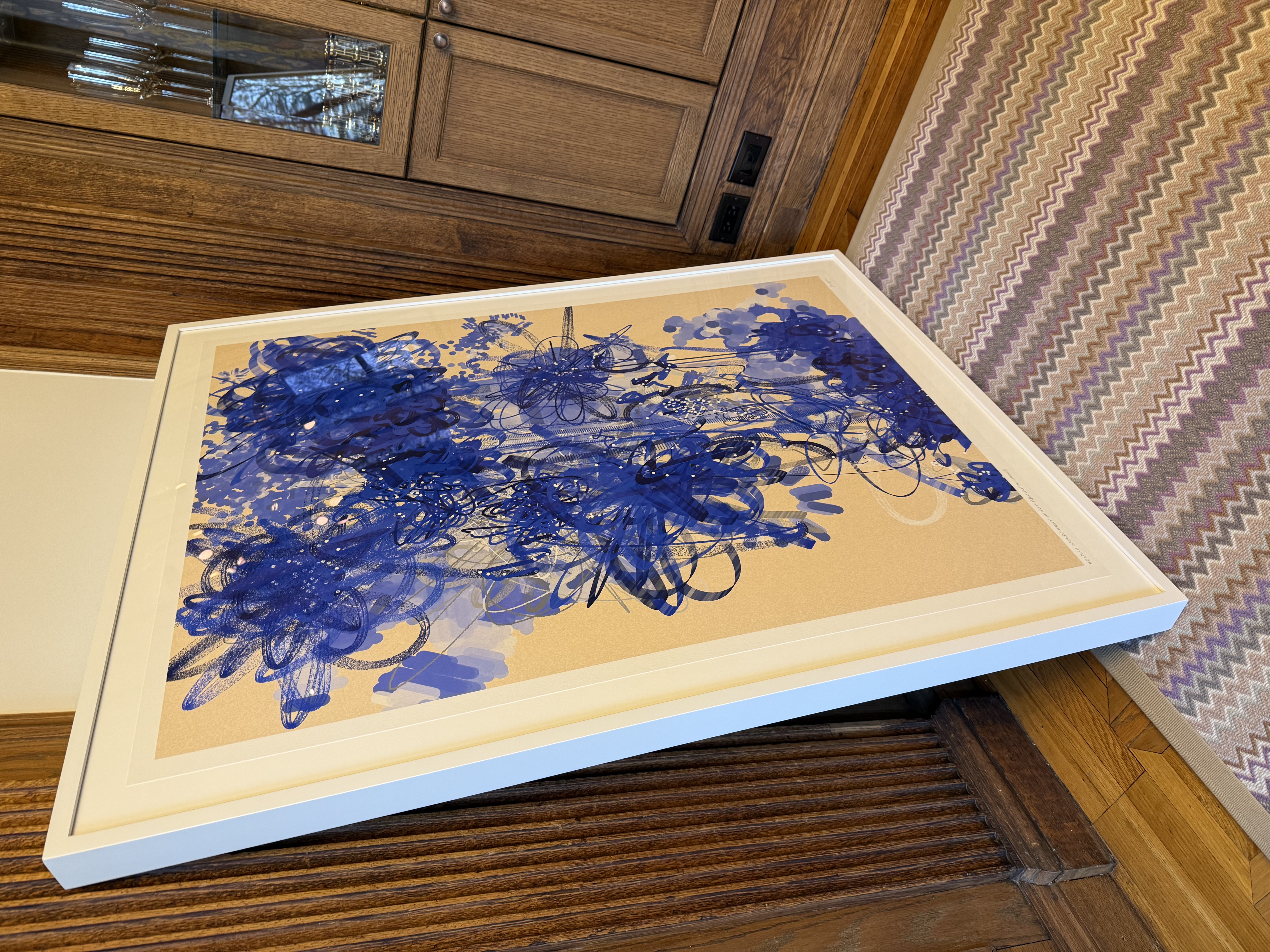
A commissioned work, Anthropometrics responds to Yves Klein’s Anthropometries, from 1960, which was a kind of performance piece in which naked women dipped in blue paint made impressions of their bodies on a canvas. You can watch footage of Anthropometries here.
Instead of naked female models, I used data from my own body – sleep data, daily steps and heart rate – to render an image. Data points connected by randomized lines give an impression of flowers, a traditionally feminine form. The work starts with the spinning symbols that typically display while waiting for data to load.
The final image of each Anthropometrics animation was printed and framed.
Several People Are Typing
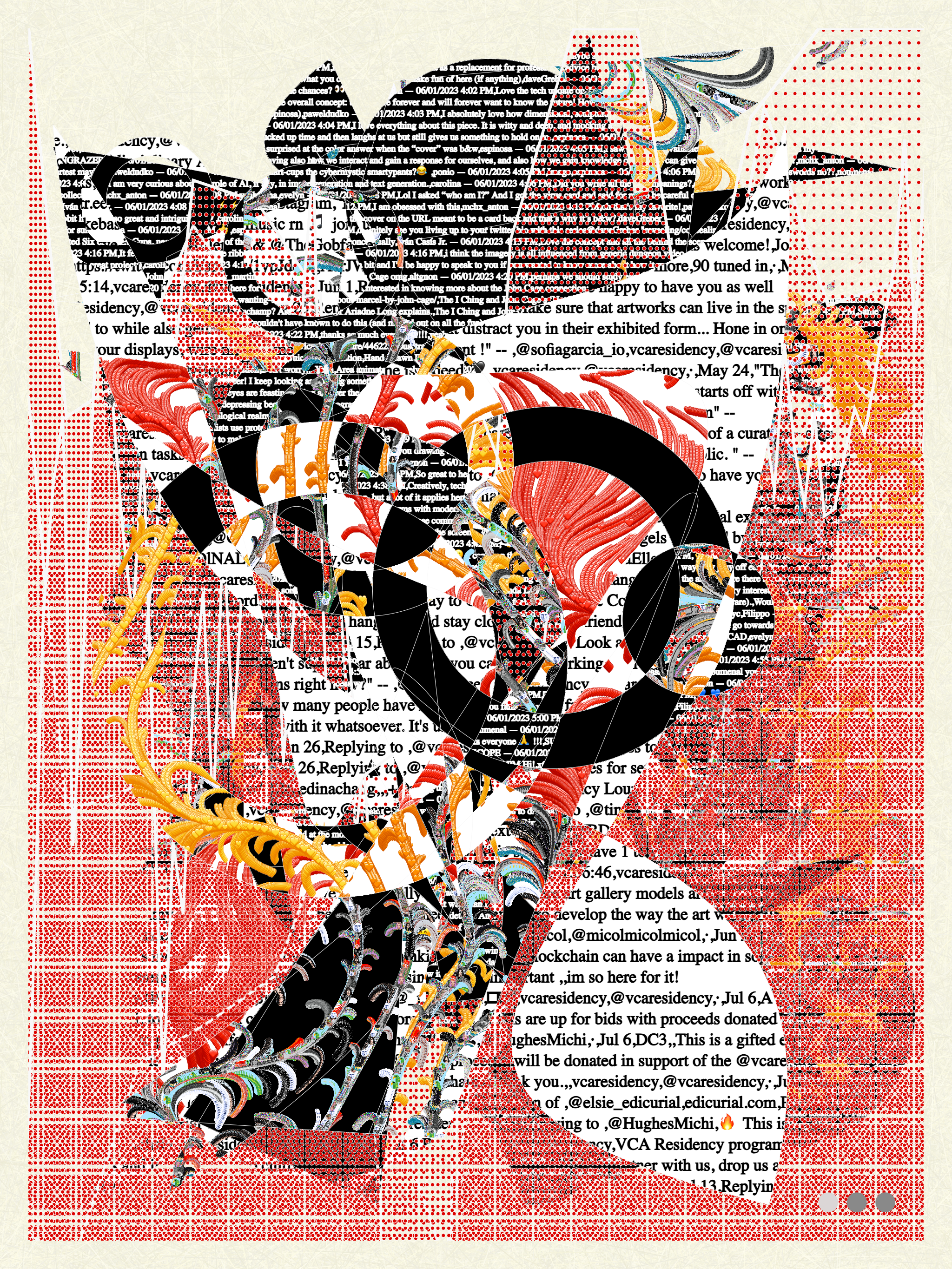
“Several People Are Typing,” my final piece for the Vertical Crypto Art Residency, is a nod to the history of scrapbooks and photo collages – deemed “women’s work” or “women’s accomplishments” during the Victorian era. These collages were often about identity, memory and the experience of new technologies of the day.
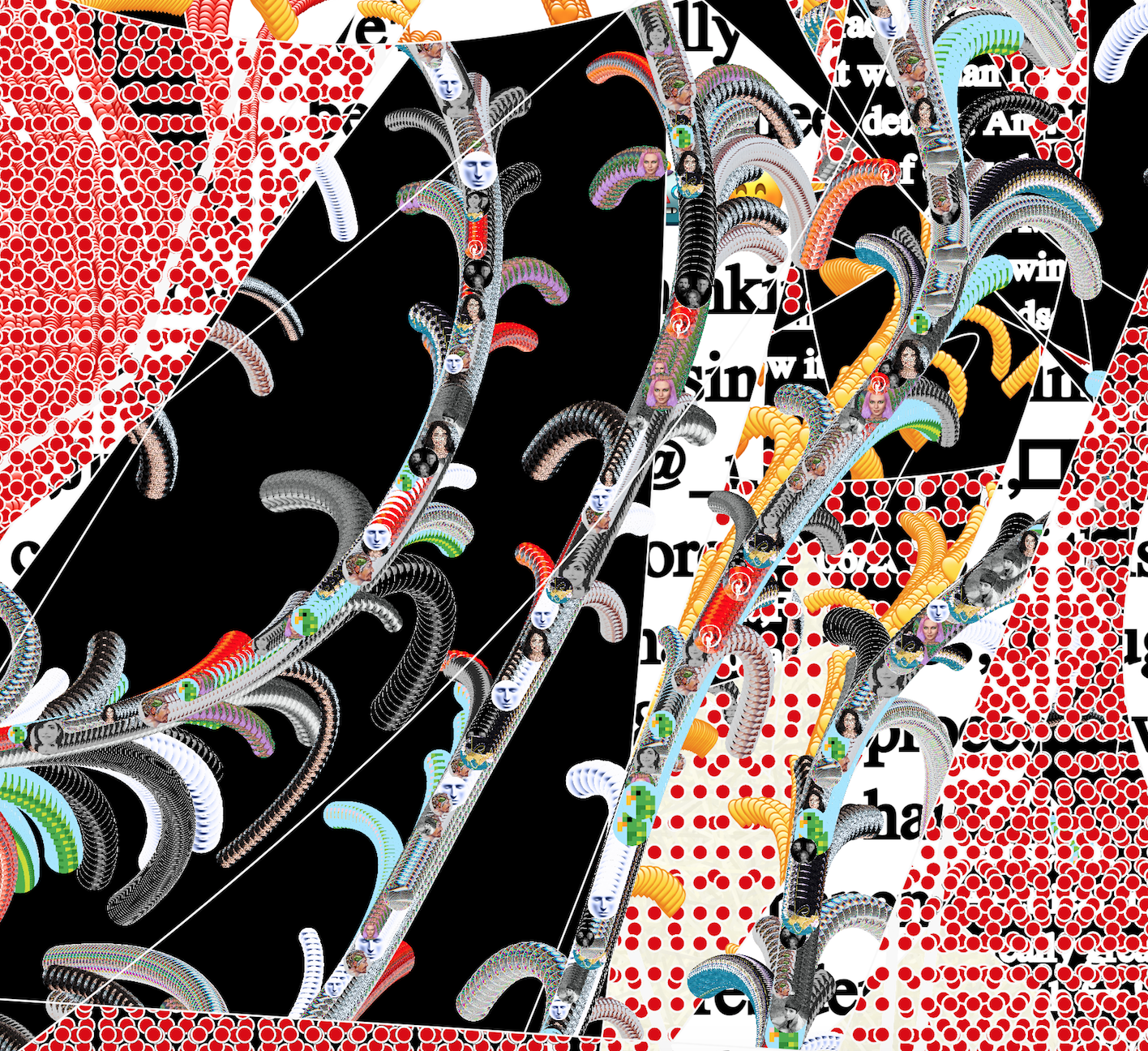
Algorithmically generated and coded in p5js, “Several People Are Typing” combines snippets from a variety of sources: text from the highly active residency discord; tweets from the @vcaresidency feed; IRL objects that sat on my desk during the residency (e.g. a ring light, a trackball mouse); and flow fields “like” ❤️ hearts as well as profile pictures of other artists in the residency.
The pfps (profile pictures) become visible up close in a print, or when you zoom into the digital image. They allude to photographic portraits of the Victorian era – a new and accessible technology at that time – that were often cut out and pasted into women’s collages.
The background displays layered graphs of everyday data – e.g. the temperature in NYC, and price charts for ETH, XTZ and the S&P. On the lower right sits an ellipsis, a symbol ever-present in real-time chat that shows when a conversation is paused… while people are typing.
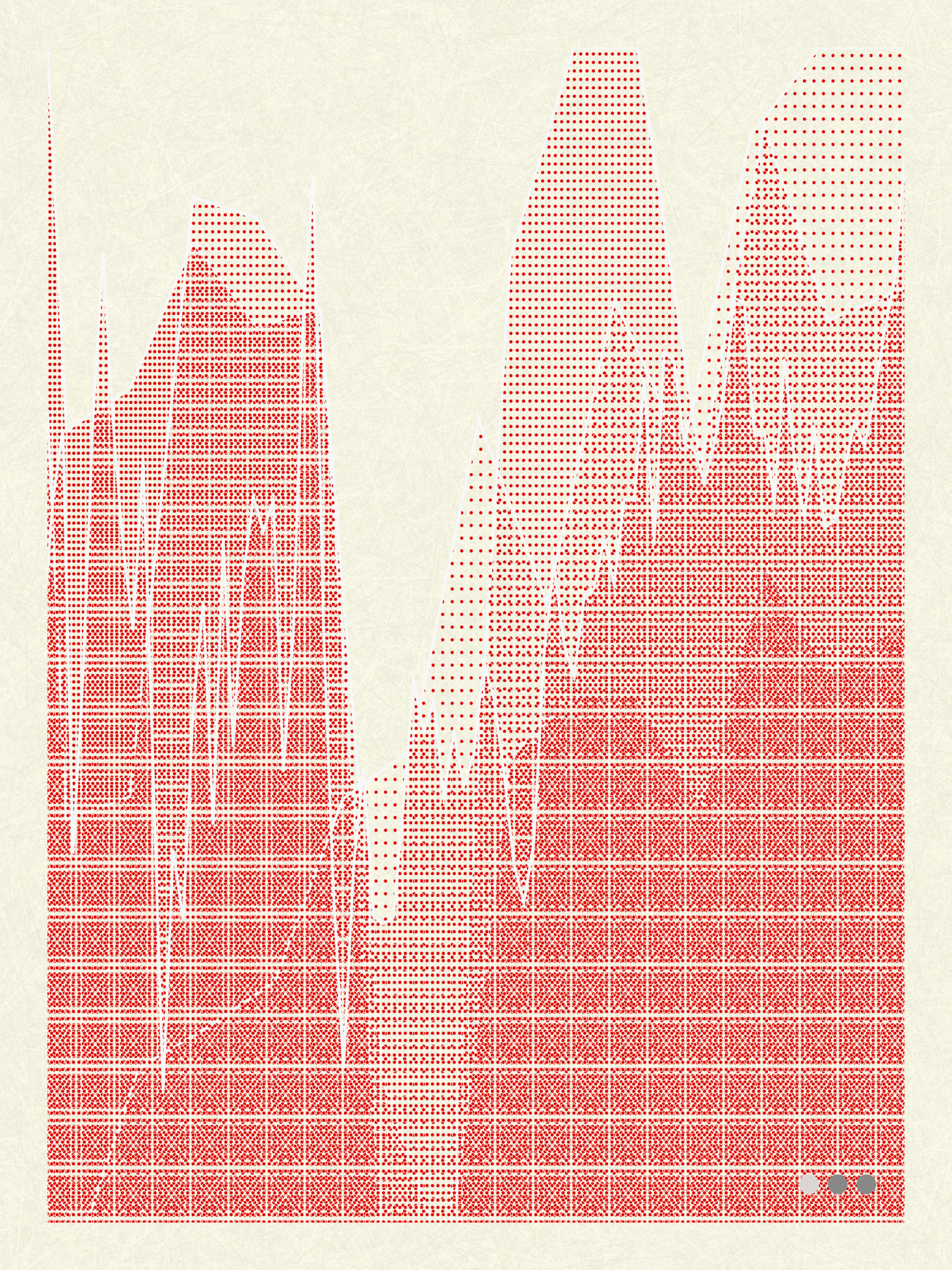
Redacted
Turn up your volume to hear the sounds of redaction as we scan through various Jeffrey Epstein files.
Riverside Impressions, IRL & AI
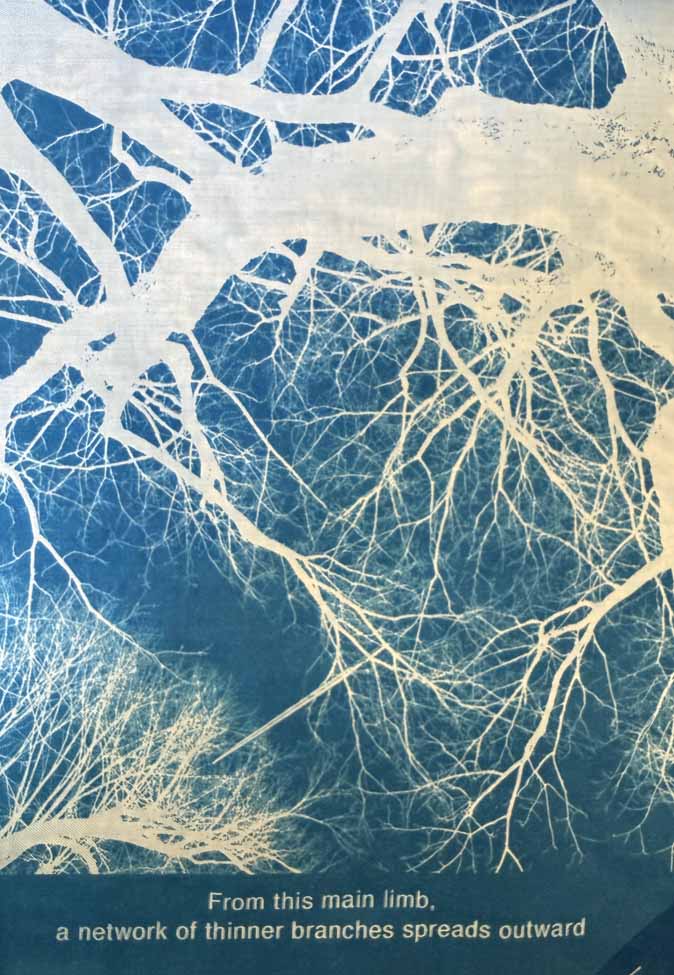
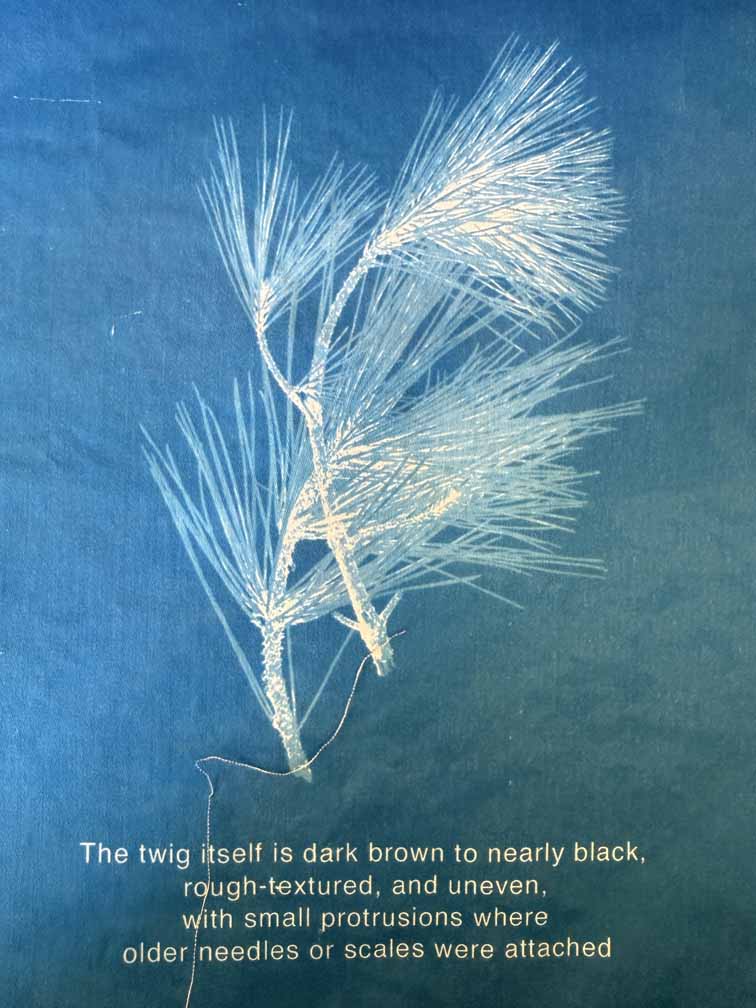
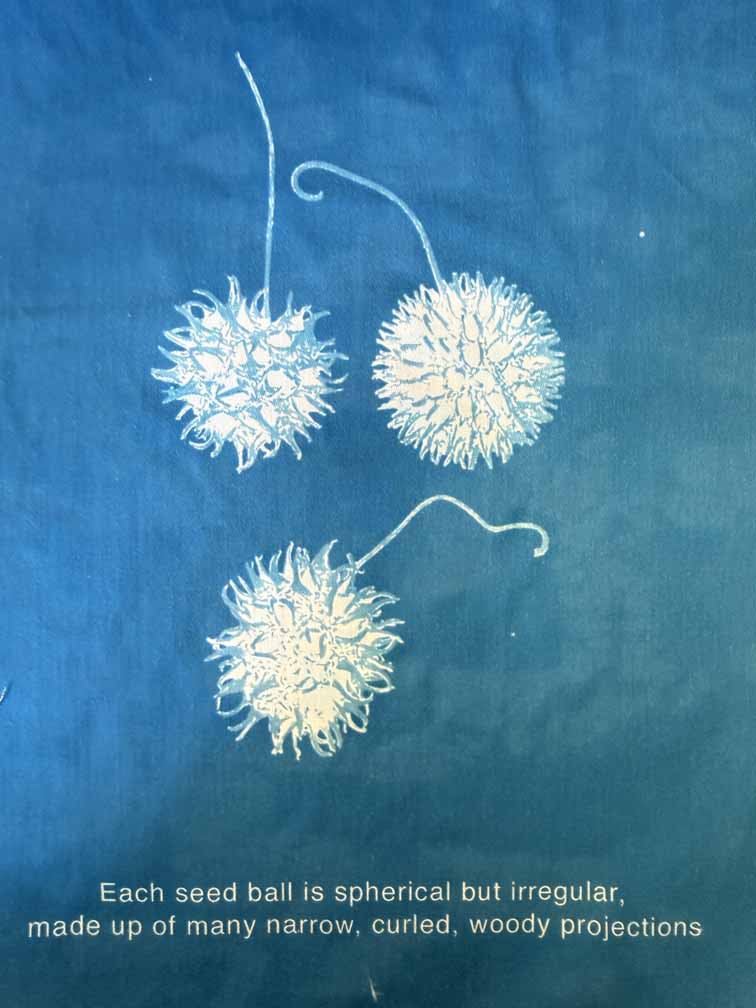
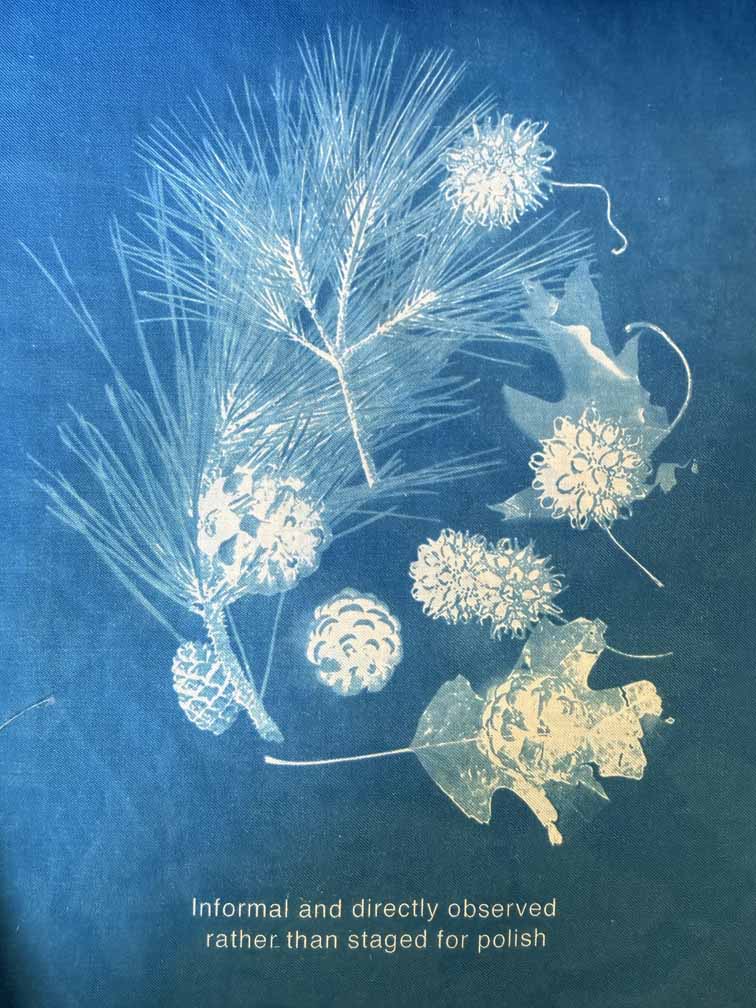
This series is an homage to Anna Atkins, a 19th century botanist who recorded the natural world in cyanotypes and compiled them into books – including Photographs of British Algae: Cyanotype Impressions, 1843, which is considered the very first book of photography.
Riverside Impressions combines IRL and AI: I photographed leaves and other found objects during a walk along Riverside Park in NYC, asked an AI to describe what it saw in those images, then fed that description to a second AI to render a new image in response. Each compilation here pairs the two – one shot by me, the other rendered by AI, the two being hard to distinguish from each other – and displays a snippet of the AI-generated description.
Proof of What Happened
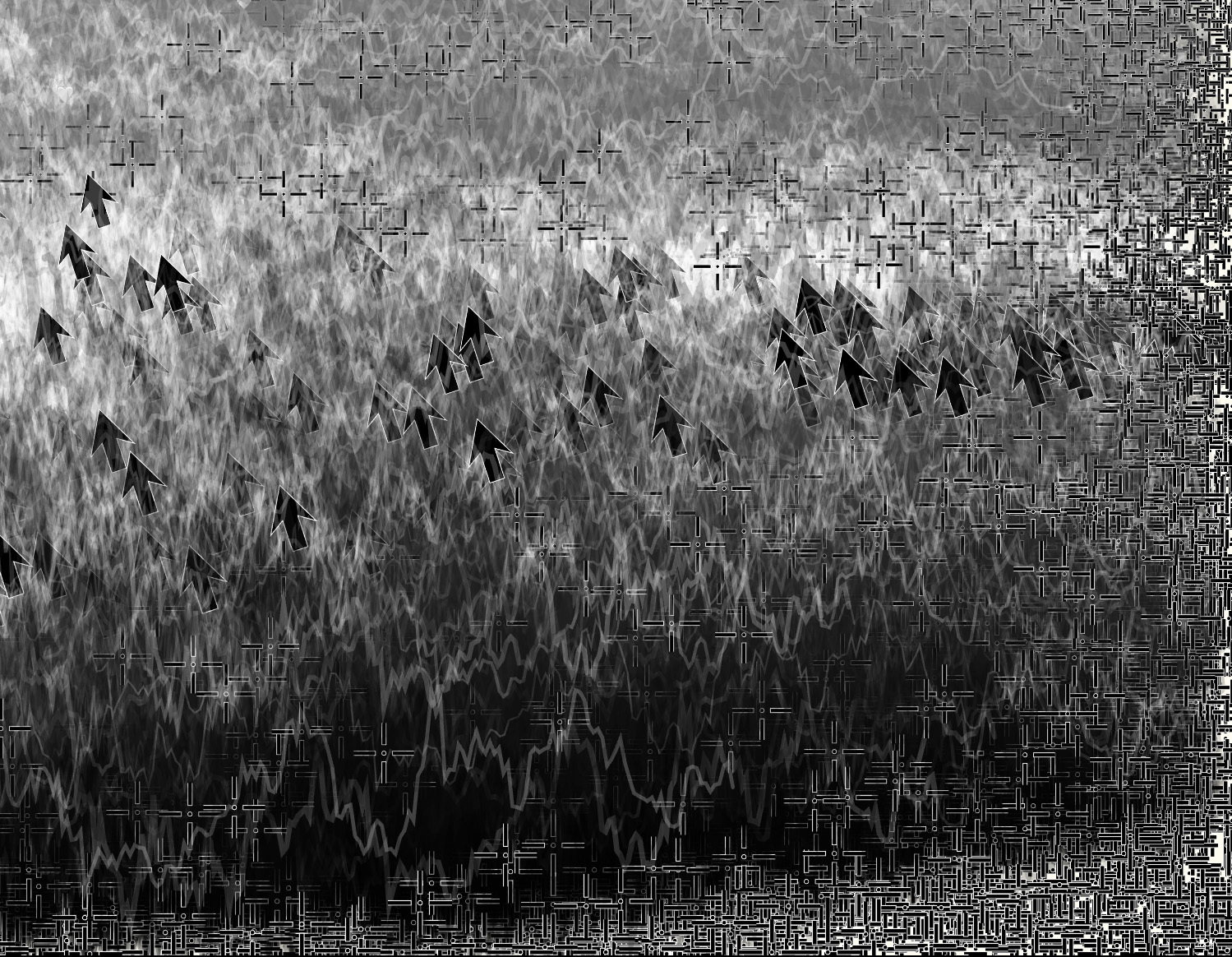
“Proof of What Happened” (a phrase from the bitcoin whitepaper) combines a range of data and digital artifacts — including BTC price charts, heartbeat graphs, standard arrow and heart icons — to create an image somewhere between online and IRL.
If you look closely, you’ll see it’s comprised of snippets of historical BTC price charts.
Symbol 1
Computer code is everywhere, often hidden. “Symbol 1” makes it visible.
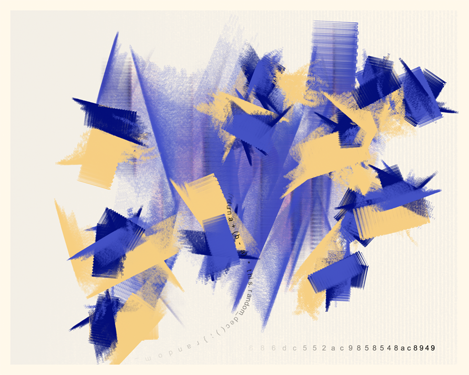
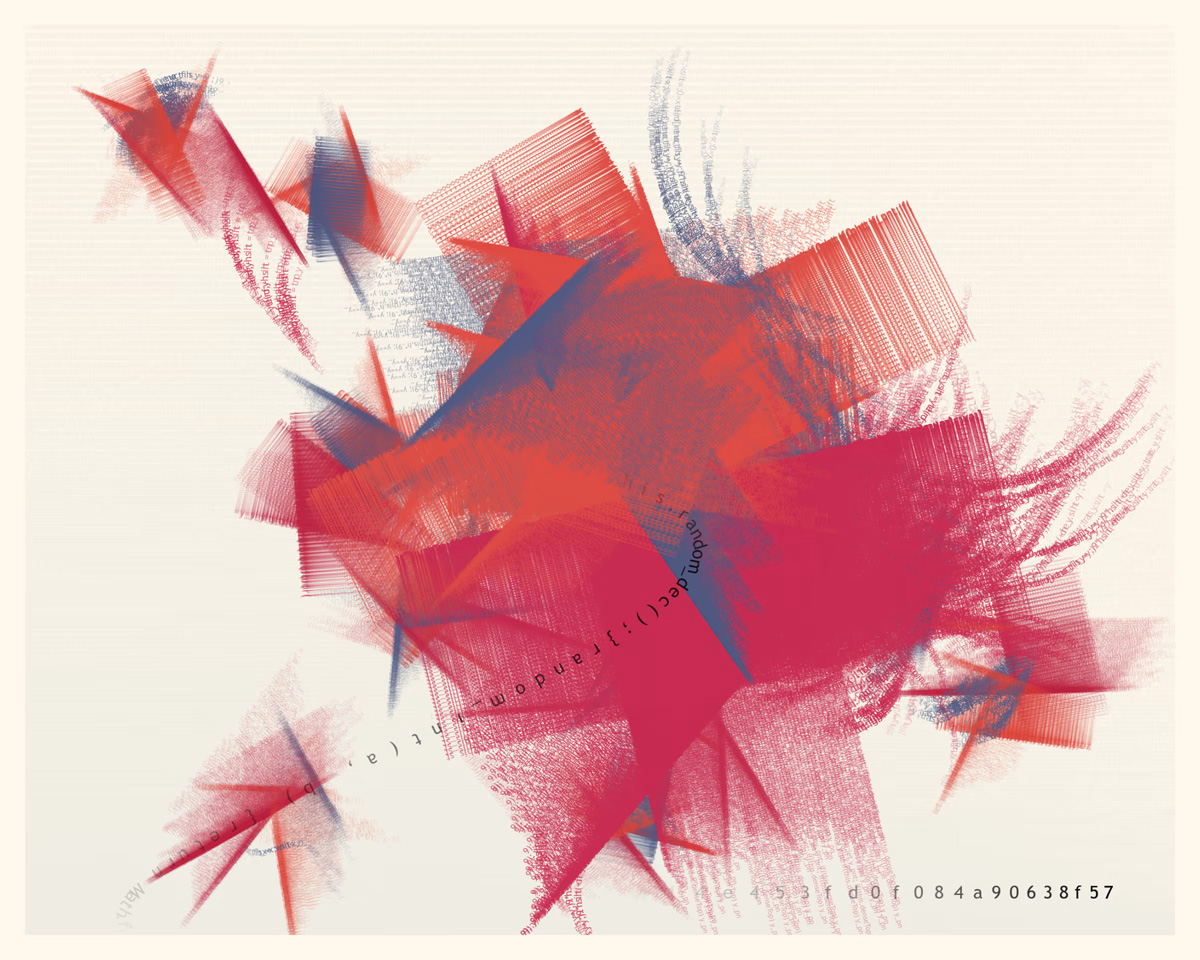
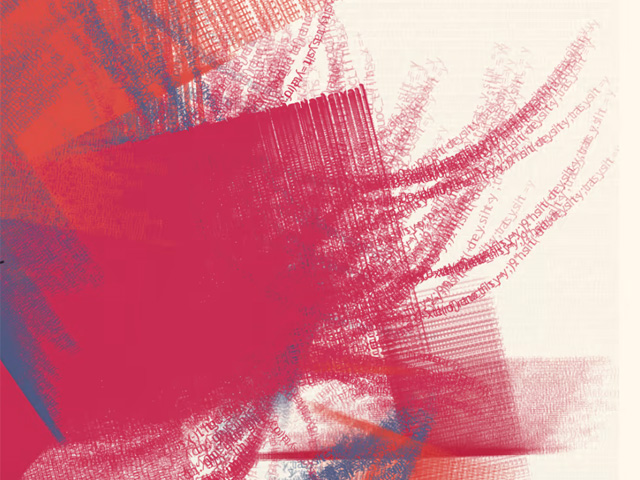
In this collection, each mark on the digital canvas is made by text of the algorithm that created it.
When viewing Symbol 1, you’re literally viewing its code — logic becoming art. Here is a close-up of the image above:
After Even Night
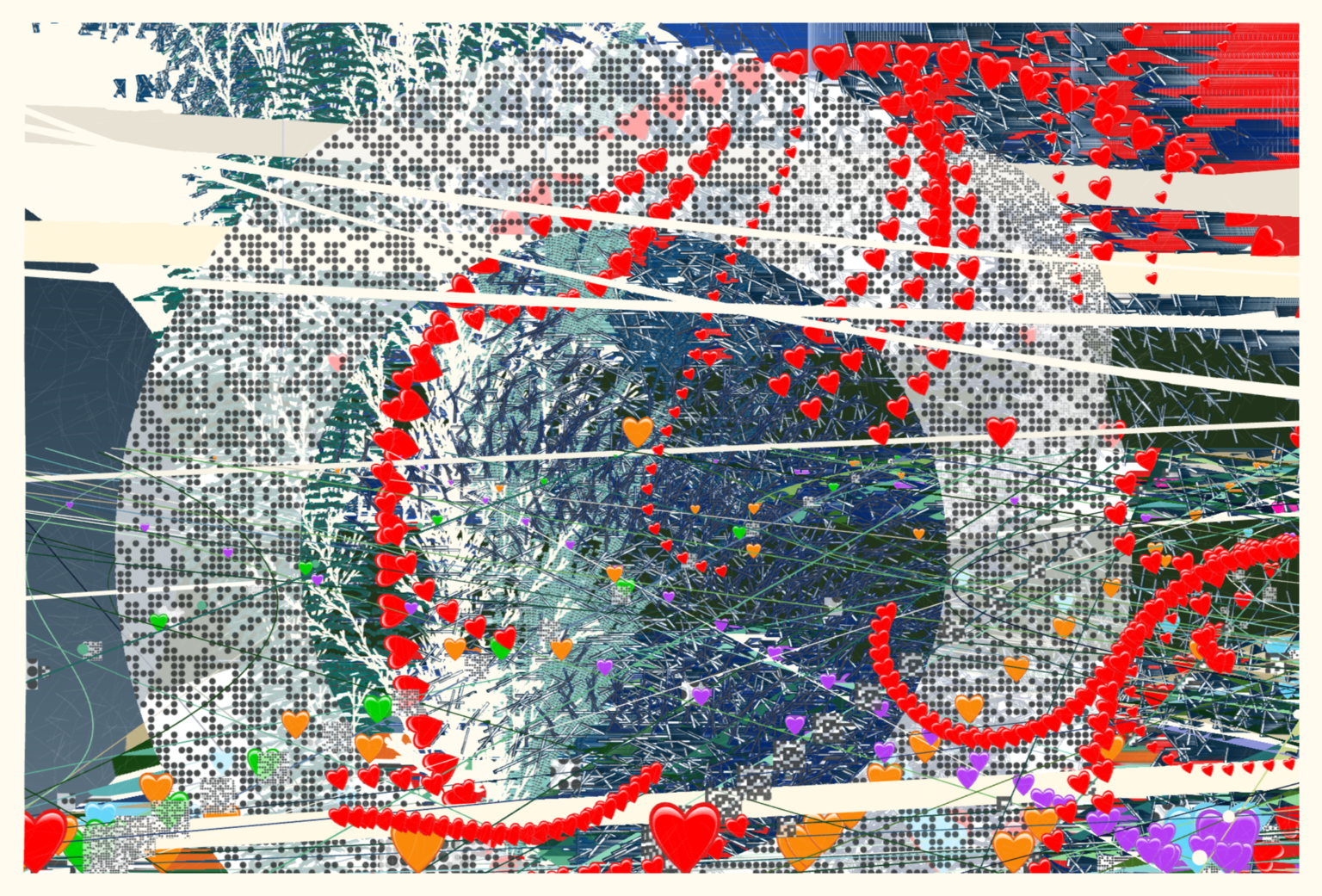
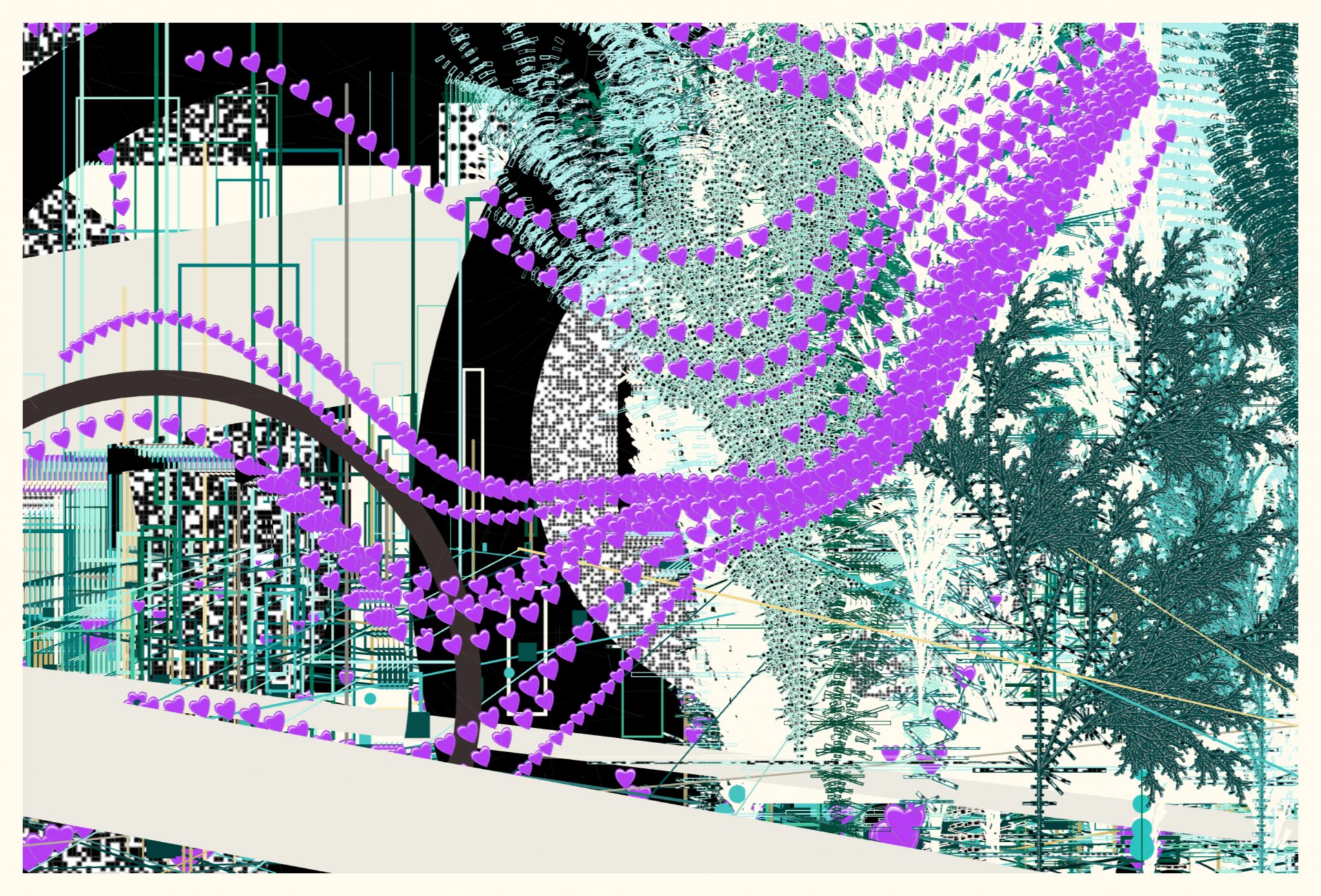
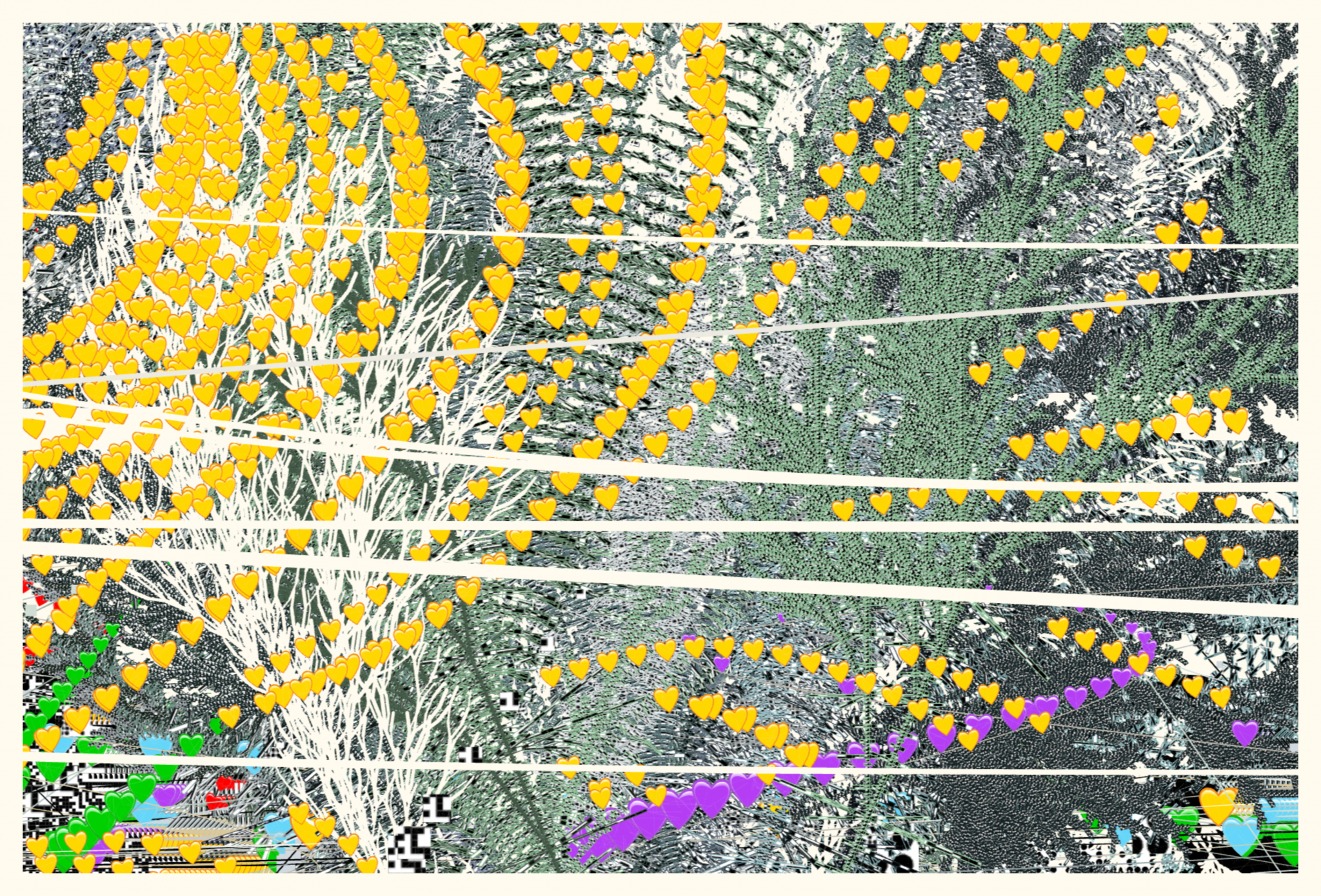
After Even Night takes the viewer on a kind of journey: An endlessly changing view, as if through the window of a train, through a kind of abstract landscape that mixes digital and real life. Stop any time to take a picture.
Scrolling past in unexpected yet familiar ways, After Even Night illustrates our strange relationship with time and space; how memory makes that relationship less linear and defined, melding one place with the next, merging past and present.
Collectors can click on the animation at any time to stop, and then double click to download an image – but the journey continues, layering and evolving, indefinitely. A few travel pics:
Pressed
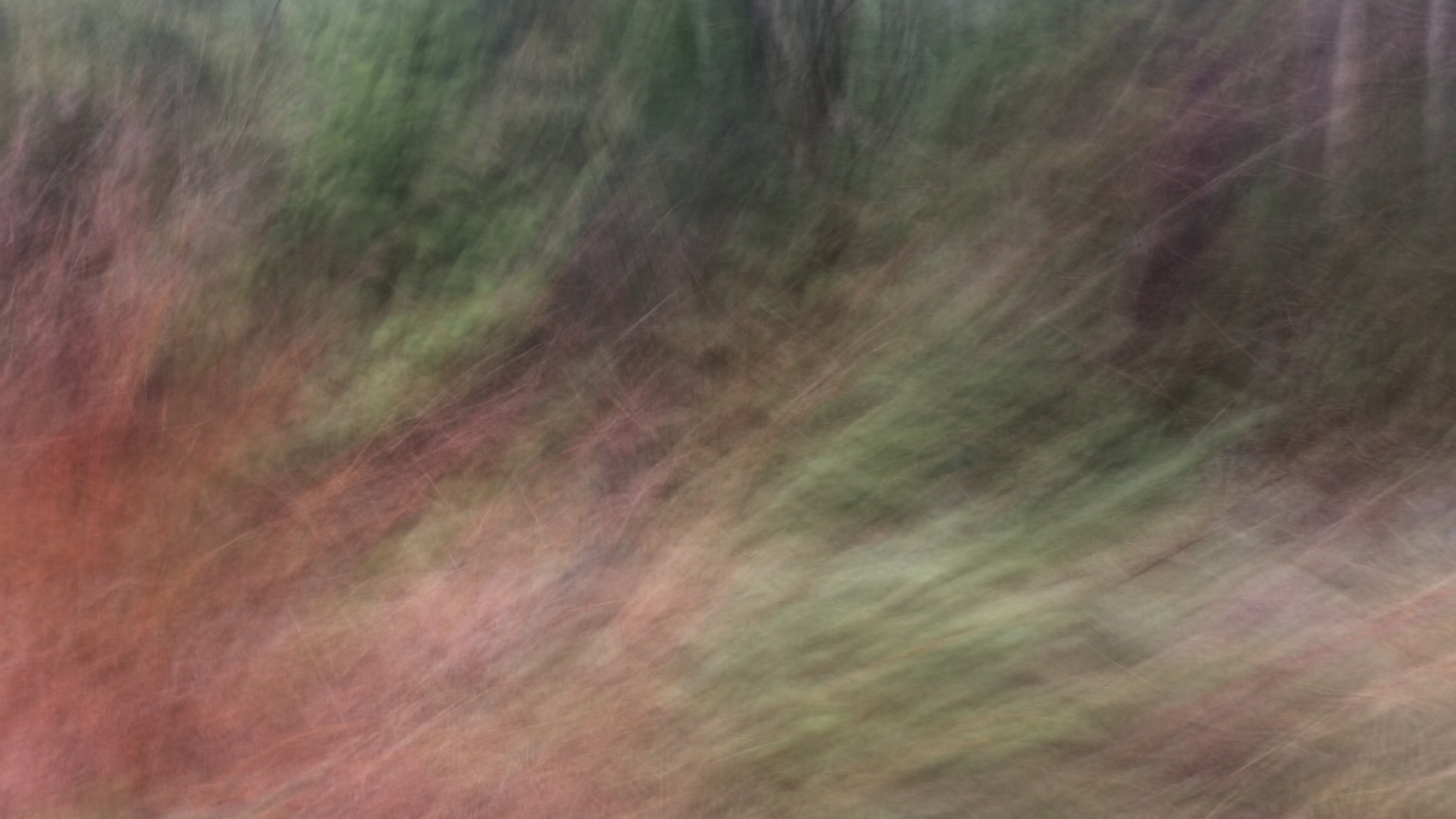
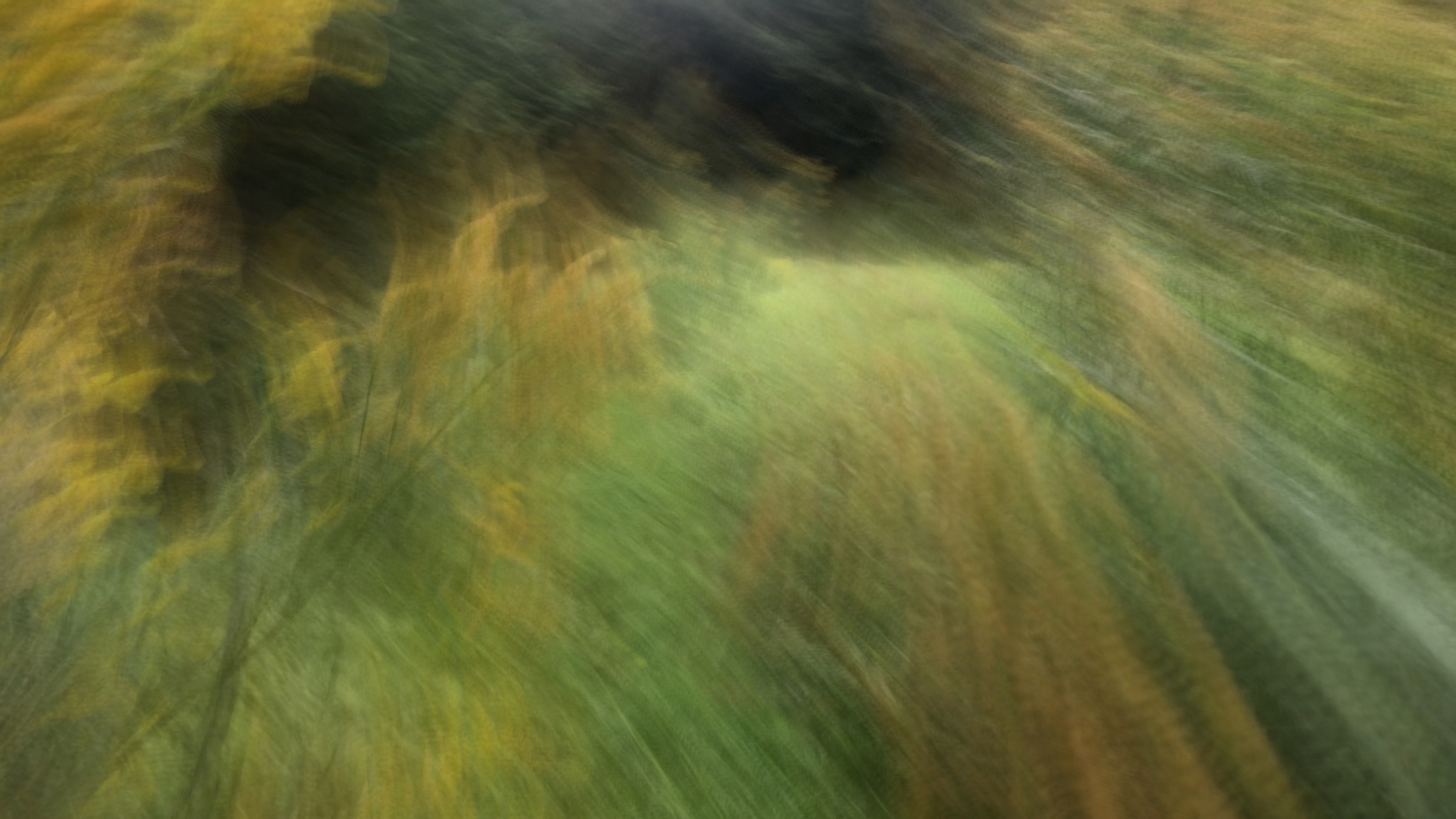
Pressed is a series of two 1 of 1s – Pressed Spring and Pressed Fall.
The digital equivalent of a pressed flower, an algorithm written in C++ collapses a video of a walk through the woods (25 seconds, 1500 frames) into a single image.
Tweed
At Chanel stores in Beverly Hills and Hong Kong, an abstracted Chanel-like fabric weaves the silhouettes of viewers into its own shifting, colorful threads. Above is footage from the opening party in Beverly Hills, showing the piece in action.
The piece responds in real time to the motion of visitors ascending and descending a staircase positioned in front of the screen.
Commissioned by Peter Marino Architects and Chanel.
Chanel in C
At the Chanel store in Beverly Hills, Chanel’s C logos appear on a large screen in front of a stairway that’s visible through a window off the street.
Chanel Cs respond in real time, in highly interactive and dynamic patterns, to the motion of viewers climbing and descending the staircase.
This installation was Commissioned by Peter Marino Architects and Chanel.
Video Frottis
A series of videos akin to digital brass rubbings, in which motion reveals ghostly contours of the physical world.
Chanel’s Paris Apartment
Place Vendôme
Wave
Commissioned by Chanel for its Global Art Collection, showcased in Chanel stores around the world.
Plunge
At the Novotel Hotel in Times Square, this monumental-scale video collage (displayed across two columns) shows bathers around the world leaping, dashing, falling and ice-carving their way into the brisk waters of a New Year.
Commissioned by Stonehill & Taylor Architects.
Perfume
At the Chanel Store in Soho, NYC, this video offers a series of studies of the Chanel C logo on the surface of a giant perfume bottle.
Commissioned by Peter Marino Architects and Chanel.
Cants and Flitches
Displayed in the lobby of Radisson Blu, Minneapolis, “Cants and Flitches” is inspired by the history of logging and mills that built and shaped Minneapolis. (In logging terminology “cants” are unfinished logs to be processed; “flitches” are unfinished planks.)
The video is generated by a kind of digital sawmill — an algorithm that deconstructs and reconstructs images of trees and parts of trees – to create new, semi-natural, harmonious images.
Commissioned by Stonehill & Taylor Architects.
Platform 1
Commissioned by the Australian Center for Moving Image in Melbourne, this interactive piece uses historical footage of the railroad platform that once occupied this site. As visitors to the museum descend a stairway inside the main gallery, their motion reveals a video of commuters moving through this space a hundred years ago.
The footage above (although very overexposed) gives a sense of how the piece appeared on location.
About
emily[at]studioemilyweil.com
Twitter/X
LinkedIn
Artist Statement
A happy accident sparked my interest in digital art: a piece of code left running on a monitor while I stepped out for a sandwich, resulting in a composition I hadn’t planned. That moment revealed a curious alchemy—the ability to write strict, logical commands that yield surprising, poetic results. I was hooked.
My work explores how human life evolves alongside, and is shaped by, emerging technologies. With my background in art, technology, and economics, my practice includes interactive architectural installations—such as dynamic displays that translate human movement into art— as well as generative code that outputs unique iterations on a theme. I like to make art that would be impossible with traditional materials, capturing the friction, speed and strange beauty of what it means to live right now.
My work has been shown in retail environments, hotels and museums in the U.S., Europe and Asia, commissioned by individual collectors, and sold on digital platforms like Objkt and Artblocks.